Moringa oleifera, often called the “miracle tree” or “tree of life,” stands as one of nature’s most nutritious plants on Earth. This incredible tree has been feeding communities and healing people for thousands of years across Africa, Asia, and South America. With leaves containing more vitamin C than oranges, more protein than eggs, and more iron than spinach, Moringa offers a powerhouse of nutrition that modern science is just beginning to fully understand. From its ancient roots in traditional medicine to its growing popularity as a modern superfood, Moringa represents a bridge between time-tested wisdom and cutting-edge nutritional science.
What Makes Moringa So Special?
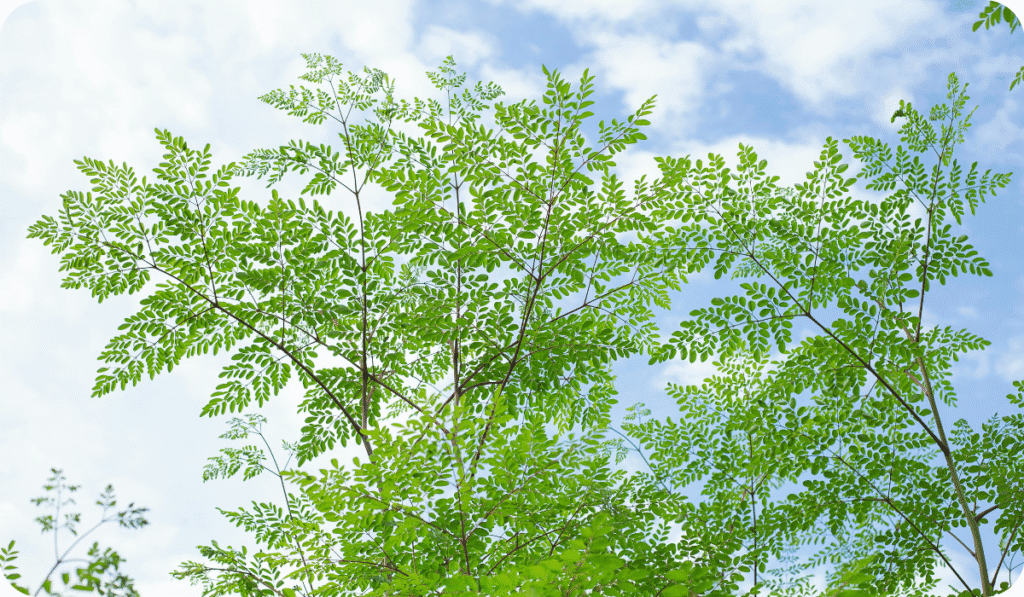
Moringa oleifera belongs to the family Moringaceae and grows as a fast-growing, drought-resistant tree that can reach heights of 10-12 meters. What sets this tree apart from others is that almost every part of it can be used for food, medicine, or other practical purposes. The leaves, pods, seeds, bark, and roots all contain valuable nutrients and compounds that benefit human health.
The tree grows incredibly fast, sometimes reaching 4 meters in its first year. This quick growth makes it an excellent solution for communities facing food shortages or malnutrition. Unlike many other nutritious plants, Moringa can grow in poor soil conditions and requires very little water, making it perfect for areas with challenging growing conditions.
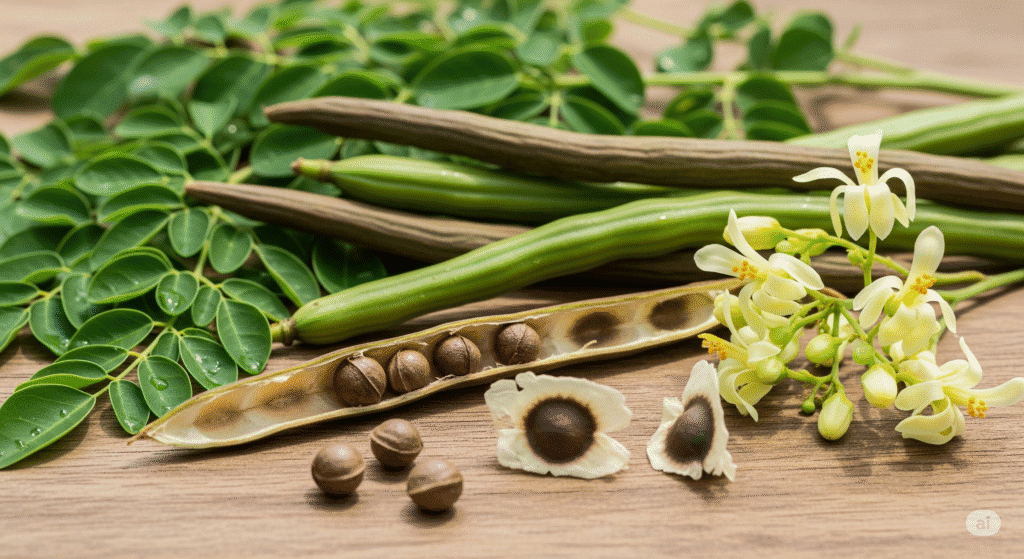
Scientists have discovered that Moringa leaves contain over 90 nutrients, including all essential amino acids that our bodies cannot make on their own. This rare combination makes Moringa one of the few plants that can provide complete nutrition, similar to what we might find in animal products. The tree also produces natural compounds called phytochemicals, which act as antioxidants and help protect our bodies from diseases.
The Ancient History and Origins of Moringa
Where It All Began
Moringa has its roots in the foothills of the Himalayan mountains in northwestern India. Archaeological evidence suggests that people have been using this remarkable tree for over 4,000 years. From its birthplace in India, Moringa slowly spread across the ancient world through trade routes and migration patterns.
The ancient Egyptians were among the first civilizations outside of India to recognize Moringa’s value. Egyptian texts from over 2,000 years ago describe using Moringa oil for skin care and preservation. The precious oil extracted from Moringa seeds was so valued that it was often buried with pharaohs to use in the afterlife.
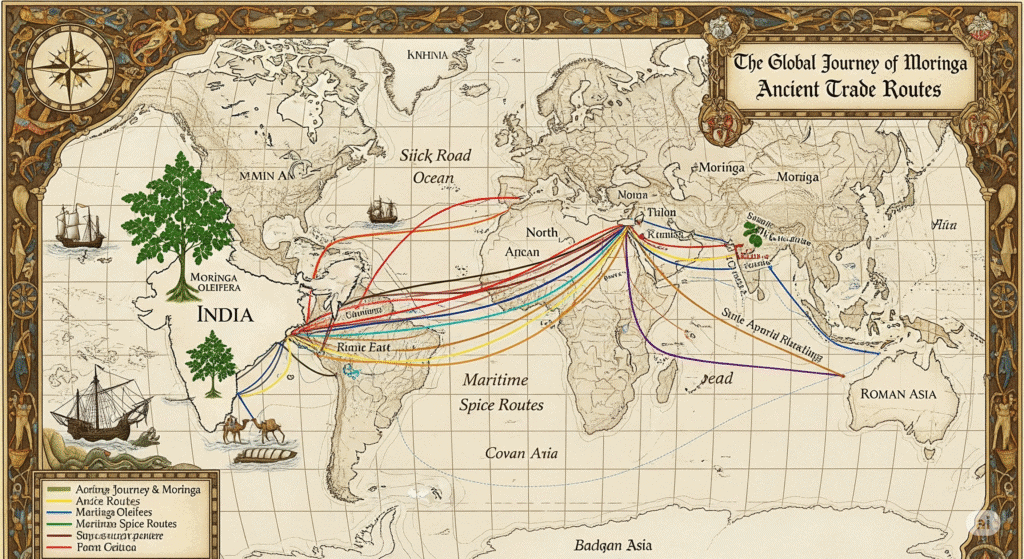
Greek and Roman soldiers carried Moringa with them during long military campaigns. They discovered that the leaves could help them stay strong and healthy even when other fresh foods were not available. Ancient Greek texts describe Moringa as a plant that could cure over 300 diseases, though modern science shows this was likely an exaggeration based on its impressive nutritional profile.
Moringa in Ancient Texts and Traditions
The ancient Indian system of medicine called Ayurveda has used Moringa for thousands of years. In Sanskrit, Moringa is known as “Shigru,” which means “moves like an arrow” – referring to how quickly the plant can penetrate and heal the body. Ancient Ayurvedic texts describe using different parts of the Moringa tree to treat various health problems, from stomach issues to skin conditions.
Hindu religious texts mention Moringa as a sacred tree with divine properties. The tree appears in several ancient stories and is often associated with purity and healing. Buddhist monks also valued Moringa and used it both as food and medicine during their spiritual practices.
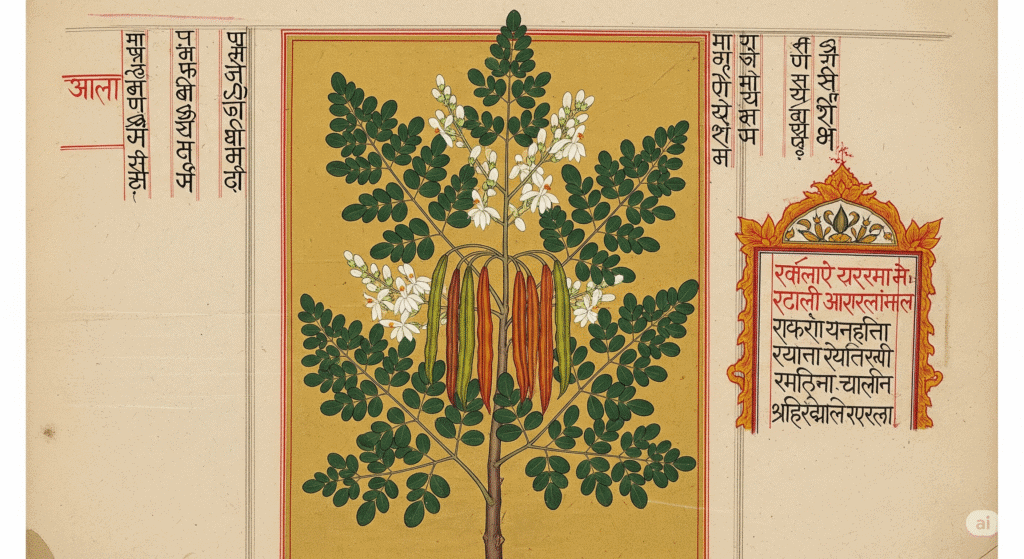
In Africa, where Moringa eventually spread through ancient trade connections, different cultures developed their own names and uses for the tree. In some African languages, Moringa is called “Nebedaye,” which means “never die,” highlighting how local communities viewed the tree’s life-giving properties.
Traditional Uses Around the World
Moringa in Indian Traditional Medicine
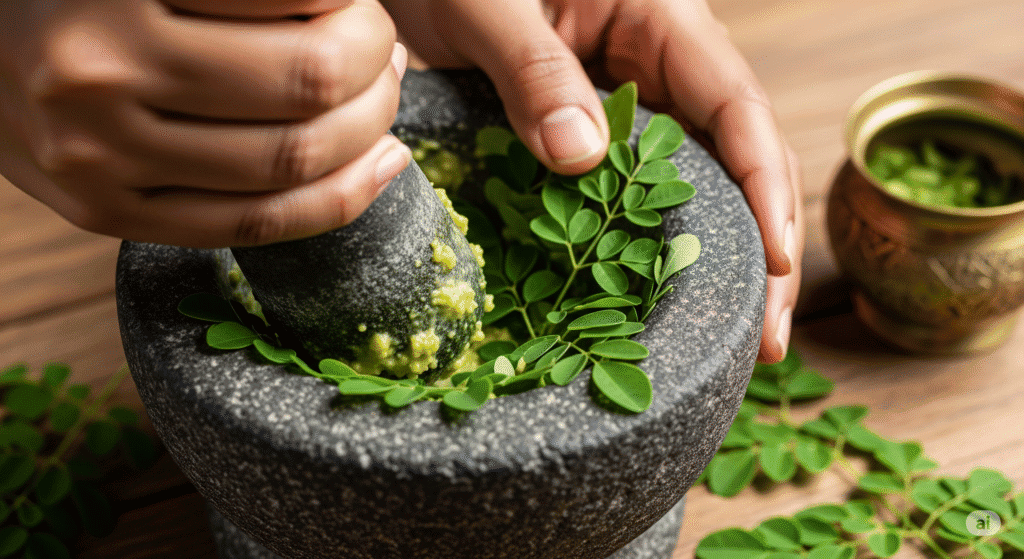
In traditional Indian medicine, practitioners use every part of the Moringa tree for different health purposes. The leaves are typically used fresh or dried and ground into powder. Traditional healers prepare Moringa leaf paste to treat cuts and wounds, believing that the plant’s natural antibacterial properties help prevent infections.
Indian mothers have traditionally given Moringa leaves to pregnant women and new mothers to increase milk production and provide essential nutrients during this critical time. The high iron content in Moringa leaves helps prevent anemia, which is common during pregnancy. Traditional recipes often combine Moringa leaves with other nutritious foods like lentils and rice to create complete, balanced meals.
The bark and roots of Moringa have been used in traditional Indian medicine to treat digestive problems and reduce inflammation. However, modern safety research shows that roots should be used very carefully or avoided entirely, as they contain compounds that can be harmful in large amounts.
African Traditional Practices
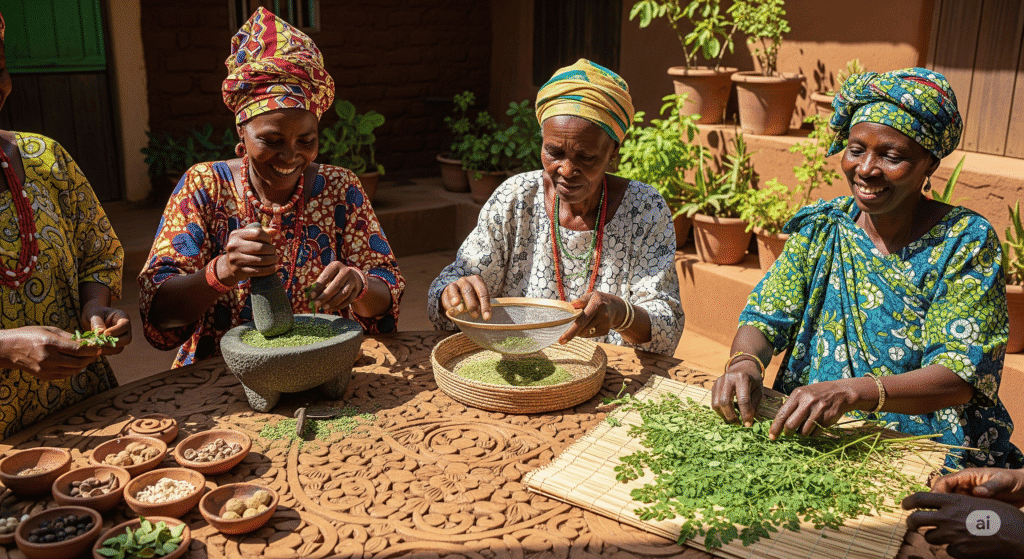
Across different African countries, Moringa has become deeply woven into local food traditions and healing practices. In Senegal, families commonly add fresh Moringa leaves to traditional stews and soups. The leaves cook quickly and add a mild, slightly spicy flavor that complements other vegetables and grains.
Many African cultures use Moringa pods, which are sometimes called “drumsticks” because of their long, thin shape. These pods are picked when young and tender, then cooked like green beans. The pods contain seeds that can be eaten when young or allowed to mature for oil extraction.
Traditional African healers often use Moringa bark to make teas for treating stomach problems and general weakness. The practice of using Moringa for water purification is also common in rural African communities, where crushed Moringa seeds are added to cloudy water to help remove dirt and bacteria.
South American and Caribbean Applications
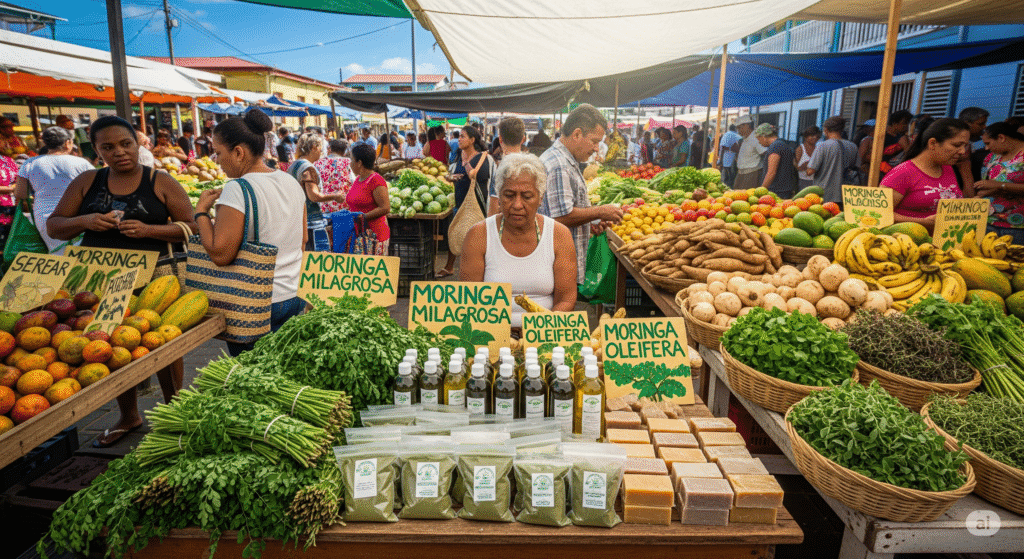
When Moringa reached South America and the Caribbean, local communities quickly adopted the tree and developed their own traditional uses. In the Philippines, which has a large population of Moringa trees, families commonly grow Moringa in their backyard gardens and use the leaves as a regular vegetable in daily cooking.
Caribbean traditional medicine uses Moringa tea as a general health tonic. Island healers believe that drinking Moringa tea regularly helps maintain energy and prevents many common illnesses. The practice of using Moringa for diabetes management also developed in Caribbean traditional medicine, long before modern science confirmed its blood sugar-regulating properties.
In parts of Central America, traditional communities use Moringa oil for cooking and skin care. The oil extracted from Moringa seeds remains stable for long periods without refrigeration, making it valuable in areas where food preservation is challenging.
The Science Behind Traditional Wisdom
Modern Research Validates Ancient Uses

Modern scientific research has begun to prove what traditional healers have known for thousands of years – Moringa really does contain extraordinary healing and nutritional properties. Studies conducted in universities around the world have confirmed that Moringa leaves contain high levels of vitamins A, C, and E, along with important minerals like calcium, potassium, and iron.
Research published in medical journals shows that Moringa contains powerful antioxidants called flavonoids and phenolic acids. These natural compounds help protect our cells from damage and may reduce the risk of serious diseases like heart disease and cancer. Scientists have found that Moringa antioxidants are even more powerful than those found in many other well-known superfoods.
Studies on Moringa’s traditional use for diabetes have shown promising results. Research indicates that compounds in Moringa leaves can help regulate blood sugar levels and improve insulin sensitivity. While more research is needed, these findings support the traditional use of Moringa for managing blood sugar problems.
Nutritional Analysis Confirms Traditional Knowledge
Detailed nutritional analysis of Moringa leaves reveals why traditional communities valued this plant so highly. Laboratory tests show that 100 grams of fresh Moringa leaves contain more vitamin C than the same amount of oranges, more vitamin A than carrots, and more calcium than milk. This exceptional nutritional density explains why Moringa has been used throughout history to prevent malnutrition.
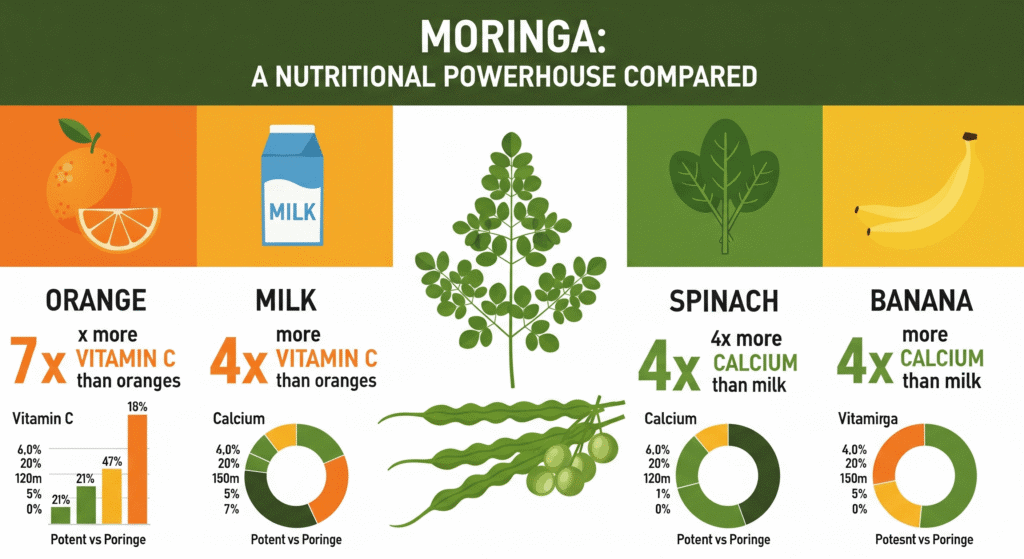
The protein content in Moringa leaves is particularly remarkable for a plant. Unlike most vegetables, Moringa contains all nine essential amino acids that our bodies need but cannot produce on their own. This complete protein profile makes Moringa especially valuable for vegetarians and people in developing countries where meat may be scarce or expensive.
Modern food safety testing has also confirmed that Moringa is safe for regular consumption when prepared properly. However, scientists recommend avoiding the roots and bark in large quantities, supporting traditional wisdom that focused primarily on using the leaves and young pods.
Growing Global Recognition
From Traditional Villages to Modern Supermarkets

The journey of Moringa from remote villages to modern supermarkets represents one of the most successful stories of traditional knowledge meeting modern demand. International health organizations, including the World Health Organization, have recognized Moringa’s potential to address malnutrition in developing countries. Programs in Africa and Asia now promote Moringa cultivation as a sustainable solution to food security problems.
In developed countries, Moringa has gained popularity as a superfood supplement. Health-conscious consumers can now find Moringa powder, capsules, and teas in natural food stores and mainstream supermarkets. The global Moringa market has grown rapidly, creating economic opportunities for farmers in traditional growing regions.
Celebrity endorsements and social media have also contributed to Moringa’s growing popularity. Health influencers and nutritionists frequently recommend Moringa as a natural way to boost energy and overall health. However, this modern popularity has also led to some exaggerated health claims that go beyond what scientific research currently supports.
Sustainable Future for the Miracle Tree
Environmental Benefits and Conservation
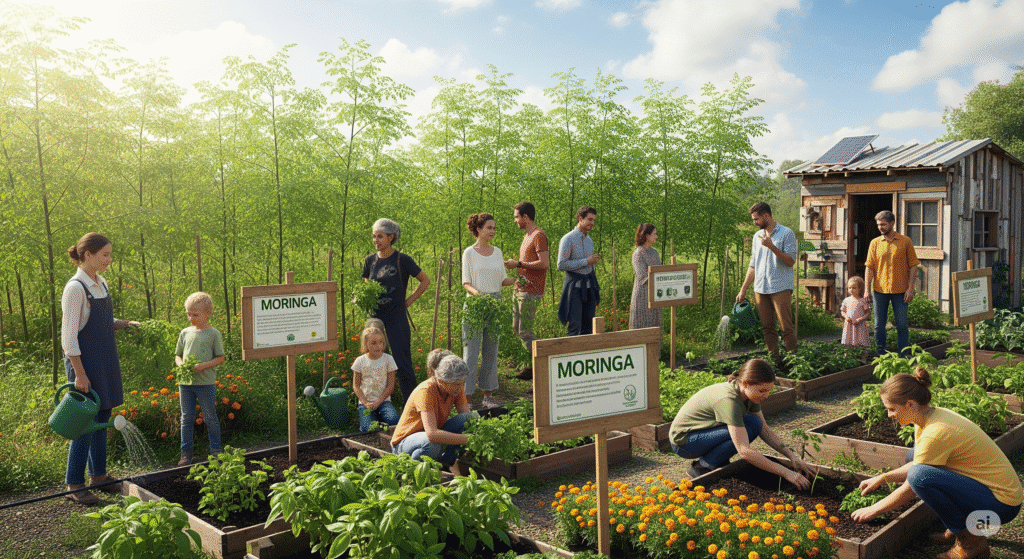
Moringa offers significant environmental benefits that align with modern sustainability goals. The tree grows quickly without requiring chemical fertilizers or pesticides, making it an environmentally friendly crop. Its deep root system helps prevent soil erosion, while its leaves can be harvested multiple times per year without harming the tree.
Climate change research shows that drought-resistant crops like Moringa will become increasingly important as weather patterns become less predictable. The tree’s ability to thrive in poor soil and limited water makes it an ideal crop for regions affected by climate change. Agricultural experts recommend Moringa cultivation as part of climate adaptation strategies for vulnerable communities.
Conservation efforts now focus on preserving genetic diversity within Moringa species and protecting wild populations in their native habitats. Seed banks around the world collect and store different varieties of Moringa to ensure future generations can benefit from this remarkable tree.
Conclusion
Moringa oleifera stands as a remarkable example of how traditional knowledge and modern science can work together to benefit human health and environmental sustainability. From its ancient origins in the Himalayan foothills to its current status as a global superfood, Moringa has consistently demonstrated its value as both food and medicine. The extensive traditional uses across different cultures, now validated by scientific research, confirm that this truly is nature’s miracle tree.
The growing recognition of Moringa’s potential offers hope for addressing modern challenges like malnutrition, food security, and sustainable agriculture. As research continues and cultivation expands, Moringa represents a bridge between ancient wisdom and modern solutions. For individuals seeking natural ways to improve their health and for communities looking for sustainable food sources, Moringa offers proven benefits backed by thousands of years of traditional use and increasingly robust scientific evidence.
The future of Moringa looks bright as more people discover its incredible properties and more research confirms its safety and effectiveness. Whether consumed as fresh leaves in traditional dishes or as modern supplements, Moringa continues to live up to its reputation as the miracle tree that has nourished and healed humanity for millennia.